
WELCOME TO TEAM FOSTER
The Route: Employee, BoD, and Volunteer Onboarding Guide
Start Here
Welcome to Team Foster!
Whether you’re joining us for the first time or returning as a valued volunteer, we’re so glad you’re here. We’re incredibly grateful for the time, energy, and dedication you bring to the mission.
Every hour you give, every task you take on, and every connection you make helps Team Foster move forward. You are an important part of what makes our work possible, and we couldn’t do it without you.
To help you navigate your role and understand how we operate, we’ve created Team Foster’s Standard Operating Procedures — or, as we like to call them, The Route.
Think of The Route as your guide to the Team Foster experience: where we’re going, how we get there, and how we work together along the way.
To get started, please take a few minutes to complete the following onboarding items:
Send your license or government issued ID, headshot, and a short bio to jesshagen@teamfoster.org.
We highly encourage you to learn about Team Foster's Staff, Board of Directors, and Advisory Council, by visiting our Team Page.
Read through The Route (below). This is essential reading to understand how we operate and how you can contribute most effectively.
At the bottom of The Route, you'll find Team Foster policies, please select the button that is most appropriate to your position at Team Foster, download, sign, and send back to jesshagen@teamfoster.org.
Download the Microsoft Teams App for easier access to updates, resources, and communication with the rest of the Team Foster community.
Thank you for being part of something bigger, together, we’re making a difference.
Organizational Chart
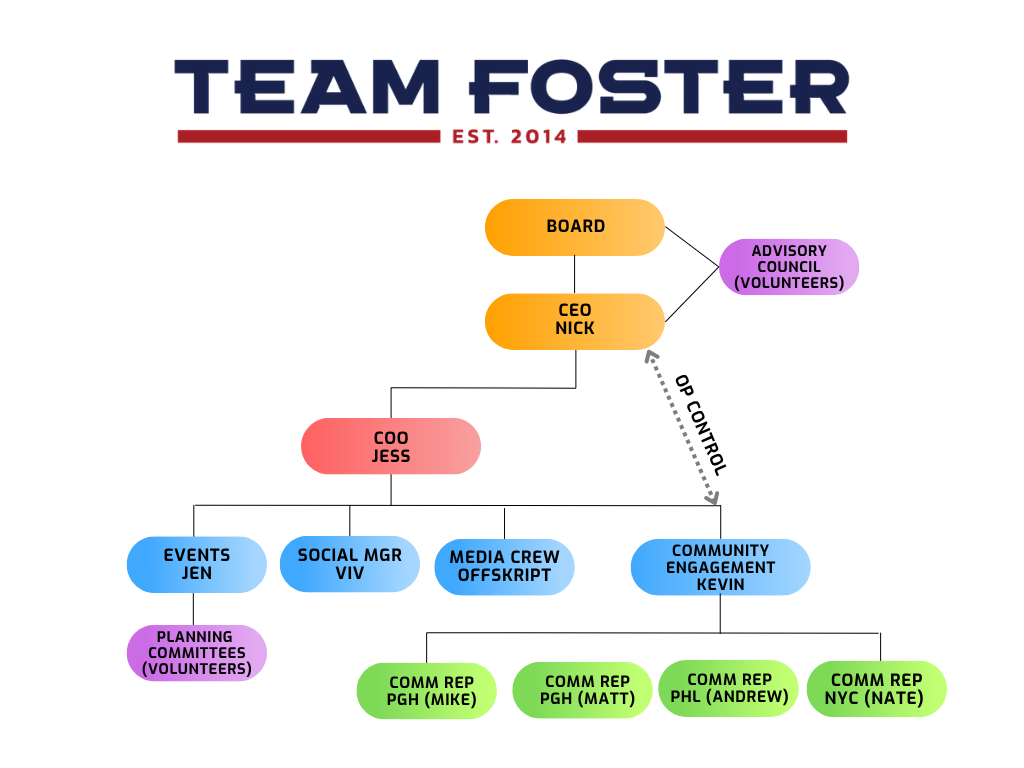
Team Foster thrives because of the strength of our community. From our dedicated staff and Board of Directors to our Advisory Council members and incredible volunteers, every person plays an important role in advancing our mission.
Our work is made possible by people who believe in showing up, lending a hand, sharing their expertise, and supporting our Veterans.
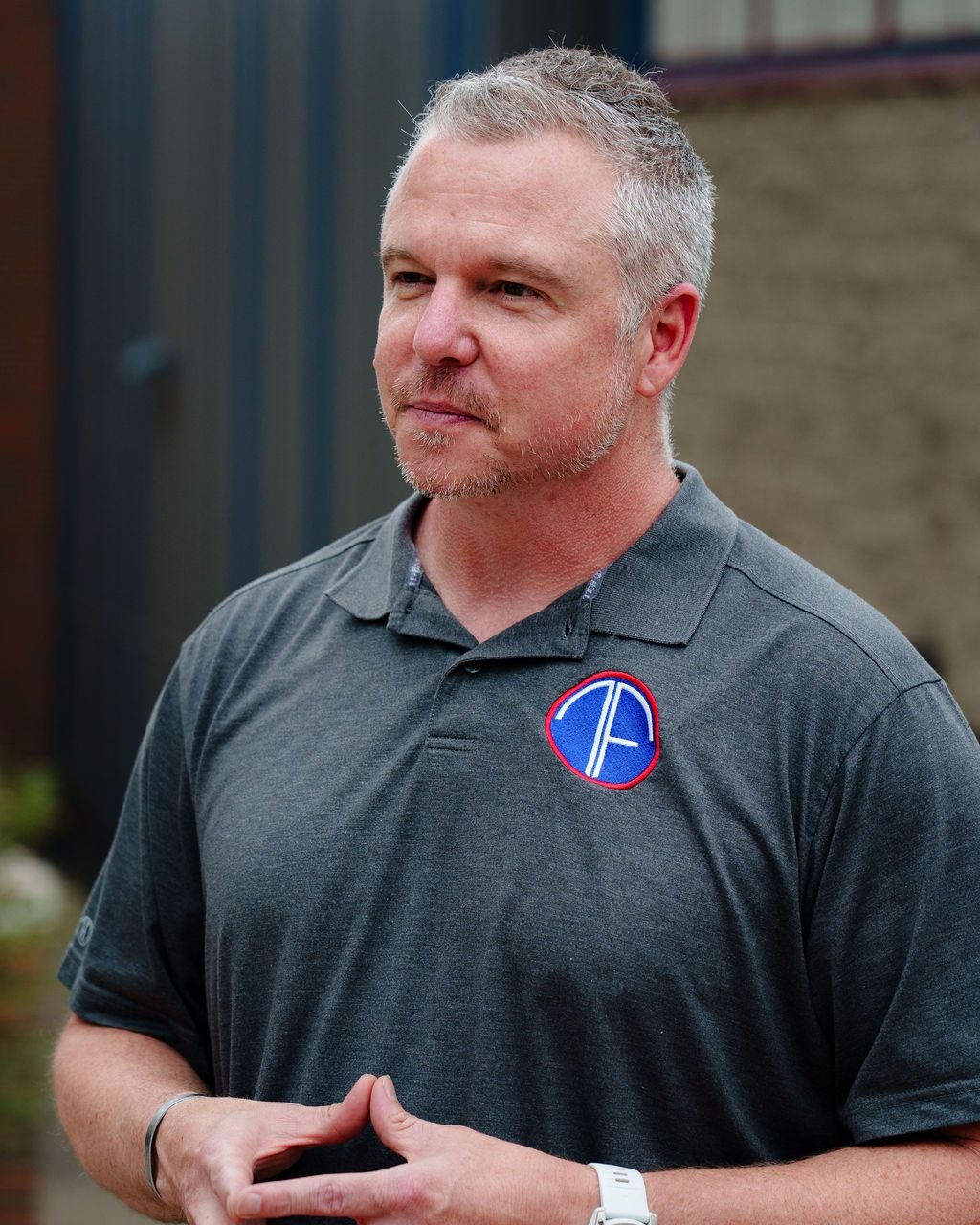
Nick Liermann I Founder I CEO
A Note From Nick
We are grateful you have chosen to be part of our community. Whether you are a staff member, volunteer, Board member, sponsor, partner, donor, or supporter, you play an important role in our mission to provide highly trained, life-saving service dogs to injured and disabled Veterans.
Team Foster is more than an organization. We are a community united by a shared belief that we can make a meaningful difference in the lives of Veterans. Through fundraising, events, education, advocacy, partnerships, and outreach, we work together to create lasting impact.
As a member of Team Foster, we ask you to show up, engage with our community, represent our mission with pride, and help introduce others to the work we do. Every volunteer hour, dollar raised, relationship built, and conversation started brings us closer to reaching more Veterans.
Our Veterans have given so much. They deserve for us to show up.
Thank you for believing in this mission and for bringing your talents and passion to Team Foster. We are proud to have you on the team and look forward to the impact we will make together. — Nick
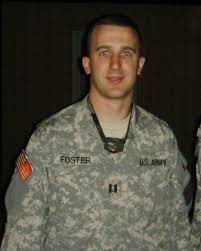
Cpt Erick Foster
Erick Foster was a born leader. No one pushed himself harder or cared of his teammates more. Erick served as an Army officer, earning his Ranger tab and Airborne wings. While assigned as Troop Commander with the 82nd Airborne Division, Erick was leading his soldiers on patrol in Muqdadiyah, Iraq when his unit was ambushed by insurgents. Struck by small arms fire, Erick ultimately succumbed to his wounds on August 29, 2007.
Team Foster Mission
TEAM FOSTER RAISES MONEY TO PROVIDE ACCREDITED, LIFE-SAVING SERVICE DOGS TO INJURED AND DISABLED VETERANS.
Team Foster:
Funds highly trained and accredited service dogs for injured and disabled Veterans at no cost to the Veteran and provides lifetime support to its Veteran–service dog teams. Team Foster brings civilians, Veterans and service dogs together to provide the resources that our government does not.
Advocates for Veterans and their service dogs in the community, workplace, and the legislature. Team Foster works to achieve the best possible training for service dogs and fair treatment of Veterans.
Educates and raises awareness across the nation about the challenges our Veterans face, the power of service dogs, and the life-saving resource that these properly trained and accredited animals can provide.
Creates Community with Veterans and non-Veterans to rebuild lives, foster a sense of belonging, support, shared identity and purpose.
Download, sign, and return to JessHagen@TeamFoster.org
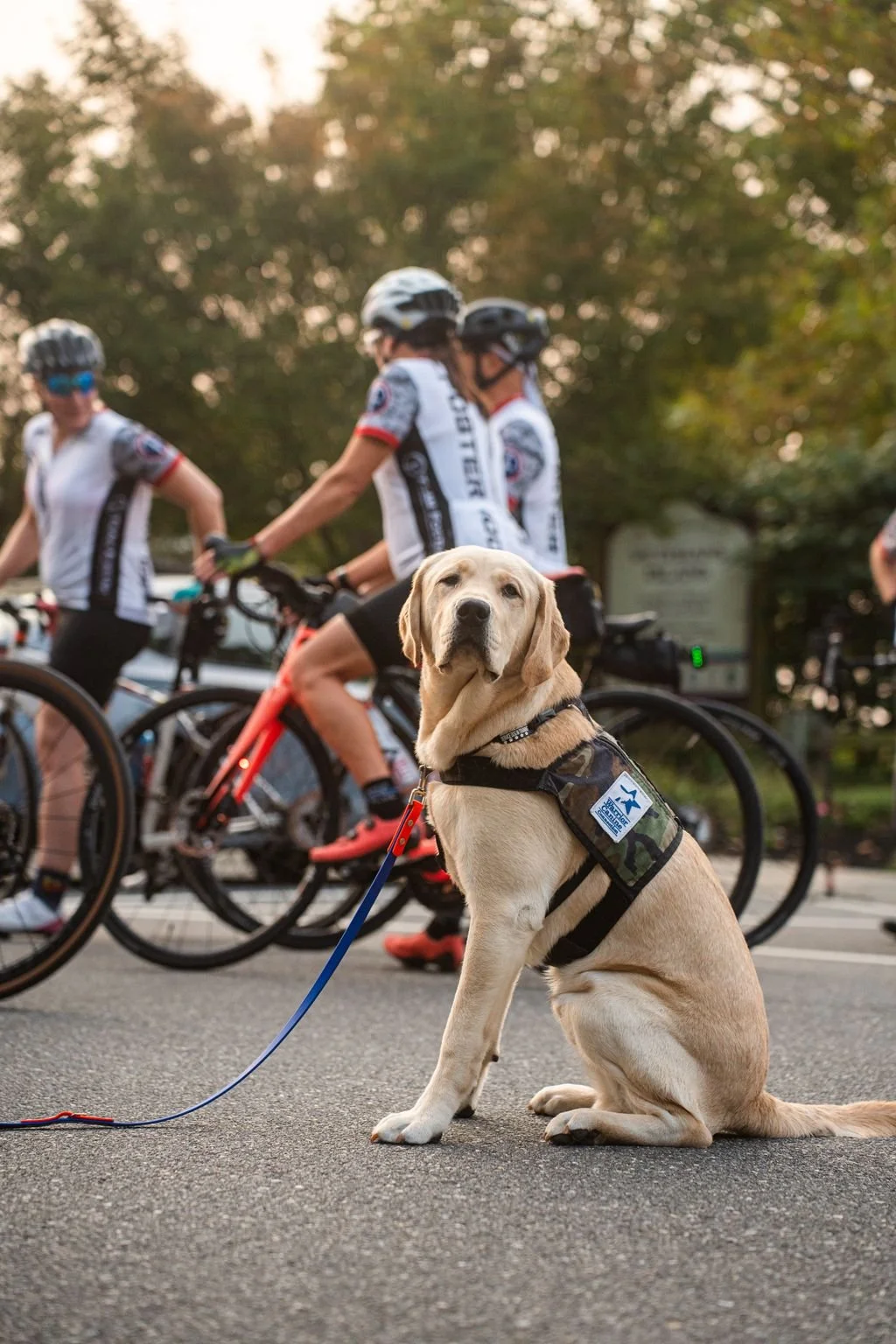
Veterans. Service Dogs. Community.
Stay Educated
We need to stay educated on the challenges Veterans face so we can better understand their experiences, recognize barriers to support, and respond with empathy and purpose. By staying informed, Team Foster can ensure our programs, outreach, and partnerships remain relevant and effective for the Veterans and families we serve.
Policy and Advocacy: An increasing number of injured and disabled Pennsylvanians, including military veterans, with service dogs face skepticism and criticism from business owners and other patrons due to bad experiences with pets that have been misrepresented as service animals. At Team Foster, we know that service dogs are life-changing partners for injured and disabled Veterans, providing critical support for PTSD, mobility challenges, anxiety, and other disabilities. Service dogs are not the same as emotional support animals. They receive specialized training to perform specific tasks for people with disabilities, and their training, purpose, and legal protections are different.
House Bill 2696 proposes important updates to the Assistance and Service Animal Integrity Act, including:
• Making it illegal to misrepresent pets as service dog
• Updating the definition of a service animal to better reflect their important role
• Codifying public accommodation and common carrier access protections under state law
These changes do not alter existing service dog training requirements. Instead, they aim to improve public understanding, reduce confusion, and help ensure that legitimate service dog teams are welcomed and respected throughout Pennsylvania. We encourage you to contact your local state representative and ask them to support legislation that protects and strengthens the rights of legitimate service dog teams. Find your legislator!
Service dogs provide life-saving support to Veterans with mental health concerns, physical injury, or disability. Service dogs reduce costs for paid assistance, provide support in public settings, improve self-mastery, and aid in social interactions and activities. Clinical data shows a wide range of benefits, including improved well-being, greater internal locus of control, more positive affect, and improved depression symptoms. Some of the most common needs for a service dog are due to Post Traumatic Stress Disorder (PTSD), Traumatic Brain Injury (TBI), and Military Sexual Trauma (MST).
Traumatic brain injury (TBI) happens when sudden trauma causes damage to the brain. This can be when the head suddenly or violently hits or is hit by an object, or when an object pierces the skull and enters the brain. Symptoms can include headaches, vision and hearing problems, sleep problems, memory problems, slower thinking, irritability, and depression.
Post-traumatic stress disorder (PTSD) is a condition that can occur in people who have experienced a life threatening, traumatic event such as a war or combat, a terrorist act, a natural disaster, or sexual assault. Symptoms can be different for each person and can appear months or years after trauma. Nightmares, flashbacks, avoiding situations that remind you of the event, avoiding people or relationships, trouble sleeping, trouble concentrating, and being easily startled are common symptoms. Depression and suicidal thoughts are common.
Military sexual trauma (MST) refers to sexual assault or repeated, threatening sexual harassment that occurred during military service. It can happen to anyone, regardless of gender, rank, age, or branch of service, and the person responsible can be a fellow service member, superior, subordinate, or another person.
The terms below are just a few of the challenges commonly discussed within the injured and disabled Veteran community. It’s important to remember that no two Veterans experience service or injury in exactly the same way. A Veteran may experience one, several, or none of these challenges, and the impact of each experience can look very different from person to person.
For example, two Veterans could be riding in the same Humvee when it strikes a roadside bomb. One Veteran may experience hearing loss and post-traumatic stress disorder, while the other may sustain a traumatic brain injury and later struggle with substance use. The event may be the same, but each Veteran’s injuries, challenges, and path forward can be completely different.
Find Your Policy Forms Below
-
Description text goes here
-
Description text goes here
-
Description text goes here
What Sets Us Apart
People-First Approach
Everything we do is built around understanding your needs and helping you succeed—because when you thrive, so do we.
Long-Term Relationships
We’re not just here for the now. We love creating lasting relationships with our clients and growing with them over time.
Proven Process, Flexible Execution
We bring structure where it counts and adaptability where it matters. Our methods are clear, but always responsive.